a novel by Reynarie Portes
Sa Maliit na Bintana
Mga salitang hindi nasabi — the words that were never said
In a small barangay, outside a small window, the memories began to gather that Polay would carry with her through the years. Through poverty, through leaving, through mistakes and getting back up, the words she never said to a friend who had become part of her childhood stayed with her.
A story of quiet love, of family, of rising again, and of the search for the life she wanted to build.
“Some words are never said, yet we carry them all our lives.”
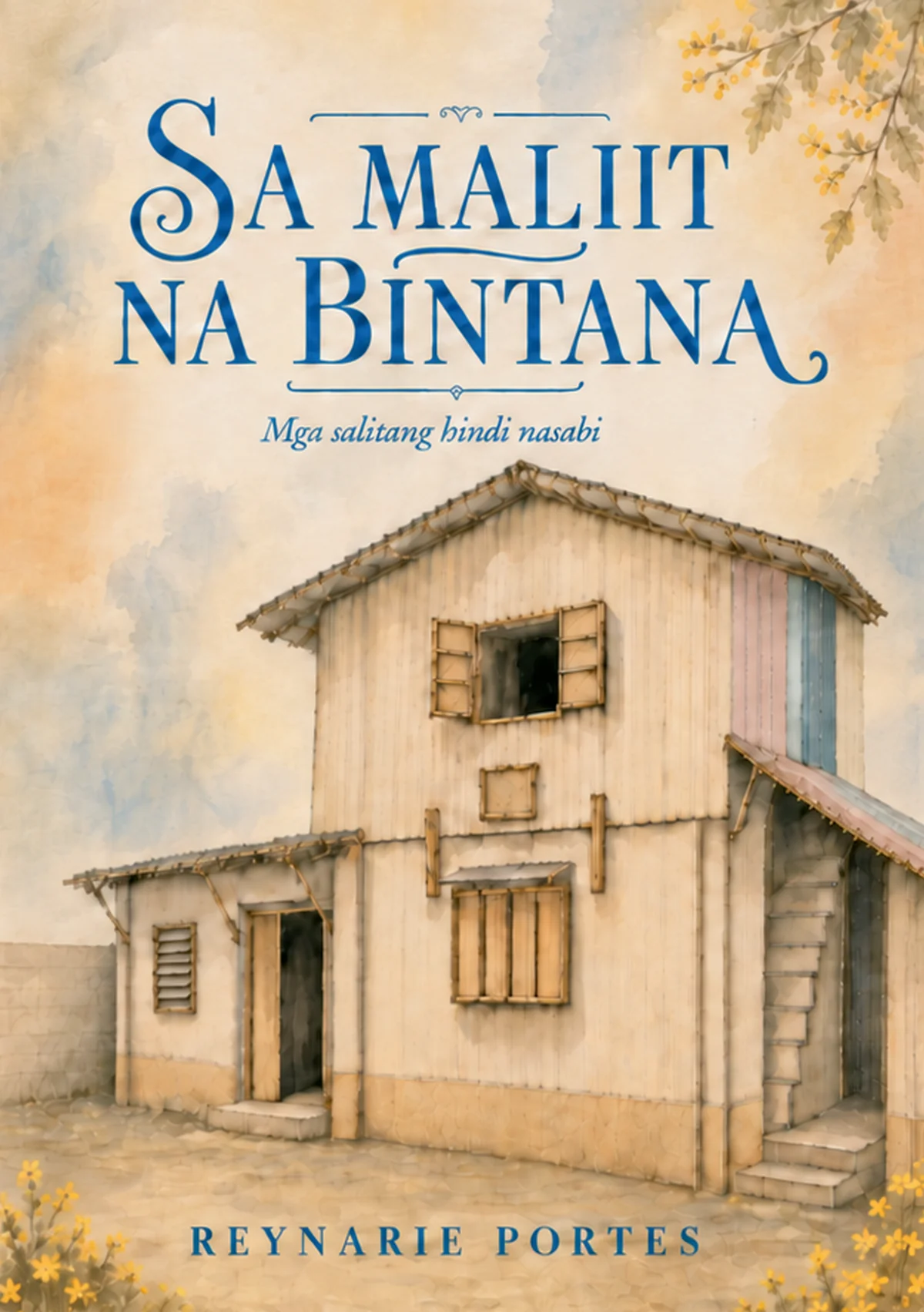
Drag to turn the book — or use the arrow keys.
the book
A real life that became a novel
As the years pass, dreams keep carrying Polay back into the past: to her friend, to the house and to the old barangay.
The novel is drawn from Reynarie Portes’s own experience. For the girl at its centre she kept the name she was called as a child — Polay. The other names, and several of the places, stand as symbols, to protect the people who became part of the story.
Sometimes it is not the rejection that hurts most, but running out of chances to say the words we have kept hidden for so long. Yet telling the truth carries its own responsibility: to respect the answer.
order
Out now, in Filipino
The novel is out. The paperback is made to order: Lulu prints it in three to five working days and ships it from there, so it takes longer than a book sitting in a warehouse. The ebook is there at once.
Both editions are sold through Lulu, the press that prints the book. Price, shipping and delivery time are shown there. List prices at Lulu as of 27 October 2026, shown in the currency Lulu uses for your country. Depending on where you are, tax and, for the paperback, shipping are added at checkout.
Prices in every currency
| Paperback | Ebook | |
|---|---|---|
| USD | $21.82 | $3.47 |
| EUR | €19.99 | €3.99 |
| GBP | £16.77 | £2.85 |
| CAD | CA$34.13 | CA$4.47 |
| AUD | A$32.47 | A$4.53 |
ISBN 978-1-291-46663-8
An English edition is in preparation and will follow. A German edition is planned after that.
the shape of the book
Five parts, sixty-two chapters
The novel moves from one road in a barangay to a life built thousands of kilometres away — and then finds its way back.
-
One Ang Barangay · The Barangay
Moonlight, a shared yard, and a childhood measured out in one-peso coins. The family from Manila arrives, and the group of children on the road grows by three.
-
Two Buhay Pagkaraan ng Pag-alis · Life After the Leaving
The house next door falls quiet. Polay learns what it costs to keep something unsaid — and what has to be carried when a family lives on whatever a morning brings in.
-
Three Ang Paghahanap · The Search
From one end of Manila to the other, Polay goes looking for the friend she never forgot. She finds her, but some searches end not in staying, but in leaving again. Only one question is left that she can say aloud: “Can I hug you, at least, before I go?”
-
Four Mga Landas ng Pagbangon · Paths of Rising
Work, mistakes, a marriage, a child. The chapters in which a life is assembled out of whatever was within reach.
-
Five Ang Pagbalik at Pag-uwi · The Return and the Coming Home
At last the question is asked, and answered. What remains is not the answer, but the child still standing outside the window.
the places
The places of the novel
Four places, and the road between them. The names come from the book itself.
-
where it begins
The barangay
A small barangay: the road, the little church, the school behind it, and the wide yard shared by two houses.
-
work and school
Manila
Where Polay stayed with relatives, worked and went back to school, and where she looked for an old friend, hoping to see her again.
-
the training
Laguna
Where Polay and her classmates went for their practical training, paying their own fare, food and keep.
-
the home she built
Germany
It was November when Polay arrived in Germany. It was the first time she had left the Philippines.
the film
A short film for the book
A minute and a half through the cover painting: the road at night, the wall where the bicycle leans, and the small window at the moment the light comes on. Filipino, in the book’s own words.
No spoken words — only music written for this film. Everything said appears on screen, in Filipino.
The lines in the film
-
Malaki ang buwan nang gabing unang makita ni Polay ang tatlong babae.
The moon was full the night Polay first saw the three girls.
-
Doon sila lumitaw — tatlong anyong magkakasamang naglalakad.
That was where they appeared — three figures walking together.
-
Hindi pa alam ni Polay kung sino sa kanila ang magiging pinakamadaling kaibiganin.
Polay did not yet know which of them would be the easiest to befriend.
-
Hindi rin niya alam kung sino ang pinakamahirap kalimutan.
Nor did she know which one would be the hardest to forget.
-
Matagal niyang inakalang si Dina lamang ang dahilan kung bakit nanatili sa kaniya ang alaala ng maliit na bintana.
For a long time she believed Dina was the only reason the memory of the small window stayed with her.
-
Hindi niya alam na kung minsan, hindi ang pagtanggi ang pinakamasakit — kundi ang pagkaubos ng pagkakataong sabihin ang mga salitang matagal mong itinago.
She did not know that sometimes it is not the refusal that hurts most — but running out of chances to say the words you kept hidden for so long.
-
Sa gitna ng kahirapan, paglalakbay, pagkakamali, at pagbangon — nanatili ang mga salitang hindi niya nasabi.
Through poverty, through leaving, through mistakes and getting back up — the words she never said stayed with her.
-
Isang kuwento ng tahimik na pagmamahal, pamilya, at pagbangon.
A story of quiet love, of family, and of rising again.
-
Halika, uwi na tayo.
Come — let us go home.
questions
Frequently asked
Where can I buy the book?
At Lulu, the press that prints it, as a paperback and as an ebook. Through Lulu’s global distribution it is also reaching other retailers such as Amazon over time.
How much does it cost?
At Lulu the paperback is $21.82, €19.99 or £16.77; the ebook is $3.47, €3.99 or £2.85. Depending on the country, tax and, for the paperback, shipping are added.
How long does delivery take?
The paperback is printed to order. Lulu takes three to five working days to print it, then it ships. The ebook is available straight after purchase.
What language is the book in?
Filipino. An English edition is in preparation, and a German one is planned after that. The first two chapters can be read on this site in English and German as well.
Is it a true story?
Yes. It is an autobiographical novel. The main character keeps the nickname Reynarie Portes had as a child, Polay. Other names and several places are changed to protect the people who are part of the story.
What format is the ebook?
PDF. It can be read on a computer, a tablet and many e-readers. There is no EPUB edition yet.
Can I read some of it first?
Yes. Chapters one and two are on this site in full, in the original and in translation.
publication
The book is out
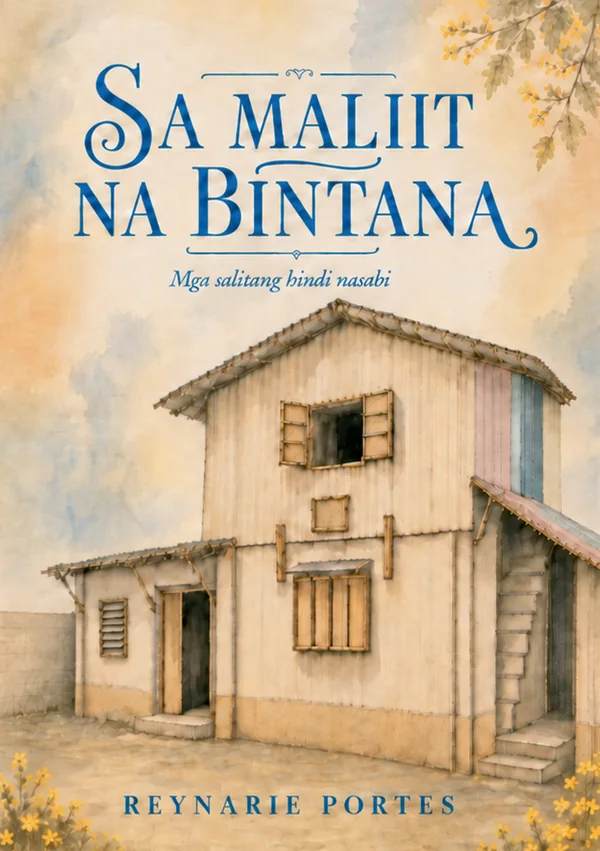
Sa Maliit na Bintana is published in Filipino: a paperback of 244 pages at 148 × 210 mm, with the watercolour cover shown here, and an ebook of the same text.
It is printed on demand, which means every copy is made after it has been ordered. That costs a few days, and it is the reason the book exists at all without a publishing house behind it.
An English edition is in preparation. Until it is ready, the first two chapters can be read on this site in English and in German.
Editions
- Filipino First edition, out now
- English In preparation
- German Planned
contact
Write to me
For questions about the book, for readings, or simply to hear when it is out — an email reaches me directly.